
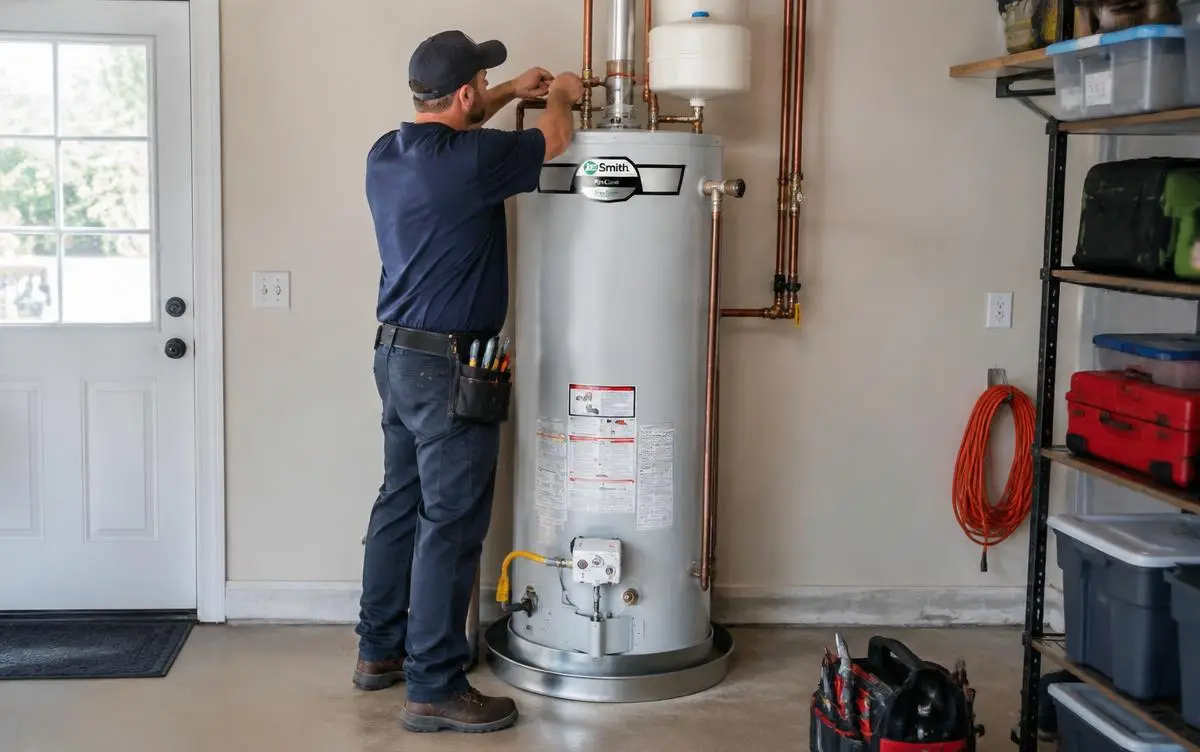
Water heater not working? Quick checks first
Most homes have a 40 to 50 gallon tank water heater, either gas or electric, and both types rely on a handful of parts that wear out on a predictable schedule. Knowing which type you have narrows the cause fast.
- For electric water heaters, check the breaker panel for a tripped double-pole breaker labeled water heater.
- Press the red reset button on the upper thermostat behind the access panel; it trips when water overheats and shuts the unit down.
- For gas water heaters, check if the pilot light is lit by looking through the small viewing window near the bottom of the tank.
- Check the gas valve on the unit is turned to the on position, and confirm ONG has not had a service interruption in your area.
- Listen and look for a leak at the bottom of the tank or around fittings; a leaking tank cannot be repaired and needs replacement.
- Check the age of the unit on the manufacturer sticker. Tanks over 10 to 12 years old fail more often from internal rust than from a single fixable part.
Causes and fixes
| Cause | Fix | Typical cost |
|---|---|---|
| Tripped breaker or reset switch | Flip breaker, press reset button | $0 |
| Pilot light out (gas) | Relight pilot following label instructions | $0 – $50 |
| Failed thermocouple (gas) | Replace thermocouple | $100 – $250 |
| Failed heating element (electric) | Replace element | $150 – $300 |
| Bad thermostat | Replace thermostat | $150 – $300 |
| Sediment buildup in tank | Flush tank | $100 – $200 |
| Gas control valve failure | Replace gas valve | $200 – $450 |
| Tank leaking or rusted through | Replace water heater | $1,200 – $2,800 installed |
| Closed gas or water shutoff valve | Reopen valve | $0 |
Step-by-step diagnosis
- Step 1: Identify gas or electric. Gas units have a burner chamber and pilot window at the bottom; electric units have no gas line and usually two round access panels on the side.
- Step 2: Electric: go to the breaker panel, find the water heater breaker, and flip it fully off then on. Open the upper access panel and press the red high-limit reset button.
- Step 3: Gas: look through the viewing window. If the pilot is out, follow the lighting instructions printed on the tank, usually holding the pilot knob while pressing an igniter button.
- Step 4: If the pilot relights but will not stay lit, suspect the thermocouple, a safety sensor that shuts gas off if it does not sense the pilot's flame; this is a common and inexpensive part to replace.
- Step 5: Check both the gas shutoff valve on the pipe and the water shutoff valve on the cold inlet line to confirm neither was closed during other work.
- Step 6: Look underneath and around the tank for water. Any pooling at the base likely means the tank itself is failing and needs replacement, not repair.
- Step 7: If breaker, reset button, pilot, and valves all check out and you still have no hot water, stop and call a plumber for the internal electrical or gas components.
Want a real price for your home?
Get a quoteSafety warning
If you smell gas near the water heater, do not attempt to relight the pilot. Leave the house and call ONG's gas emergency line at 1-800-458-4251 from outside. Do not flip any light switches on your way out.
Never bypass a high-limit reset switch repeatedly; it trips to prevent scalding water or a dangerous pressure buildup. If it trips more than once, that signals a thermostat or heating element problem that needs a licensed plumber, not continued resets.
When to call a pro
Call a plumber the same day if you have a confirmed leak at the tank, if the pilot will not stay lit after one relighting attempt, if the breaker trips again after reset, or if you see rust-colored water. A licensed plumber can test voltage at the heating elements and gas pressure at the valve safely with the right tools.
In winter, a failed water heater is an urgent comfort issue, especially with lows in the teens overnight. Most plumbing companies can get to a no-hot-water call the same day or next morning.
What a plumber does on a no-hot-water call
- Tests voltage at the breaker and each heating element with a multimeter on electric units.
- Checks thermocouple output in millivolts on gas units and replaces it if the reading is low.
- Flushes the tank to remove sediment that insulates the burner or elements from the water.
- Tests the thermostat's accuracy against the actual water temperature.
- Inspects the tank, fittings, and pressure relief valve for leaks or corrosion.
- Advises replacement over repair if the tank is over 10 years old and failing, since internal rust cannot be fixed.
What a no-hot-water fix usually costs
| Job | Typical price |
|---|---|
| Diagnostic visit | $75 – $150 |
| Thermocouple replacement | $100 – $250 |
| Heating element replacement | $150 – $300 |
| Tank flush | $100 – $200 |
| Gas control valve replacement | $200 – $450 |
| Full tank replacement, installed | $1,200 – $2,800 |
Questions to ask before hiring a plumber
Ask whether the diagnostic fee applies toward the repair cost, whether the plumber is licensed through the Oklahoma Construction Industries Board, and whether the quote covers parts and labor or just labor. If replacement is recommended, ask for both a tank and a tankless quote in writing so you can compare upfront cost against long-term operating cost before deciding.
Electric vs gas water heater differences
Electric water heaters rely on two heating elements and thermostats, and most no-heat calls trace to a tripped high-limit switch or a burned-out lower element. Gas water heaters rely on a pilot, thermocouple, and gas control valve, and most no-heat calls trace to the pilot system rather than the tank itself. Knowing which type narrows the likely fix before a plumber even arrives.
Water heater not working: match the symptom to the cause
A water heater not working because of a leaking tank cannot be repaired; the tank has to be replaced. Every other water heater not working cause in this table is usually a repair.
| Symptom | Likely cause | DIY or pro |
|---|---|---|
| No hot water at all (gas) | Pilot out, bad thermocouple, or gas valve | Relight once; pro if it goes out again |
| No hot water at all (electric) | Tripped breaker or reset button, failed element | Reset once; pro if it trips again |
| Hot water runs out fast | Sediment, failed lower element, broken dip tube | Pro |
| Rusty or brown hot water | Worn anode rod or tank rusting inside | Pro |
| Rumbling or popping | Sediment on the tank bottom | Flush; pro if it stays loud |
| Water around the base | Relief valve, drain valve, or tank leak | Pro now if the tank itself leaks |
Water heater not working after a power outage or freeze
After an outage, an electric water heater not working is often a tripped high-limit reset (the red button behind the upper panel). A gas unit with an electronic ignition may need to be power-cycled. After a hard Oklahoma freeze, if the water heater not working is gas, check the cold supply line and the drain valve for cracks before relighting.
Flexible plans while you wait for a plumber
If you cannot get a plumber out the same day, shut off the water supply valve to the tank and avoid running hot water taps to limit strain on a failing unit. A cold shower is an inconvenience, but a leaking tank left running can cause real water damage to flooring and drywall within hours.
Repair or replace
Repair makes sense under about $300 on a tank less than 8 years old. Replacement makes more sense once the tank itself is leaking, once repairs would cost more than half a new unit, or once the tank passes 10 to 12 years, since steel tanks rust from the inside out regardless of how well they were maintained.
Prevention
- Flush the tank once a year to clear sediment, which insulates the heating source from the water and causes overheating or element burnout.
- Test the pressure relief valve yearly by lifting the lever briefly; it should release a burst of water.
- Set the thermostat to 120°F, which reduces mineral buildup compared to higher settings and still delivers comfortable hot water.
- Have a plumber inspect the anode rod every 2 to 3 years; a worn-out rod lets the tank itself corrode instead.
- Replace a tank proactively at 10 to 12 years old rather than waiting for a leak that can flood a utility closet or garage.
Oklahoma hard water and this region
Tulsa-area water carries moderate mineral content that builds up as sediment inside tank water heaters faster than in areas with naturally soft water, which shortens heating element life and is why a yearly flush matters here. Cold snaps, including lows in the teens and the Feb 2021 cold wave dropping below zero, also raise incoming water temperature demand on the heater, which can expose a weak element or thermocouple that was barely getting by in warmer months.
Garages and utility closets
Many homes in Broken Arrow and Owasso built in the last two decades locate water heaters in garages, where winter temperatures drop closer to outdoor lows than an indoor closet would. A water heater in an unheated garage works harder to maintain temperature and can see pilot or ignition issues more often during the coldest weeks of the year.
Check the label on the side of the tank for the install date and warranty length before paying for a repair; many tanks under 6 years old still have a parts warranty on the element, thermostat or gas valve.
Next steps for Tulsa homeowners
- Ready to fix it? water heater repair in Tulsa — a licensed local pro calls back with a price.
- See water heater installation.
- See tankless water heater installation.
- See our water heater replacement cost guide.
Questions Tulsa homeowners ask
Why does my water heater have no hot water at all?
On electric units, check the breaker and the reset button first. On gas units, check whether the pilot light is lit. These two checks solve many no-hot-water calls.
Why does my pilot light keep going out?
A weak or failing thermocouple is the most common cause. It is an inexpensive part a plumber can usually replace in under an hour.
Is it safe to relight a gas water heater pilot myself?
Yes, following the instructions printed on the tank, as long as you do not smell gas. If you smell gas, do not attempt to relight it; leave and call ONG's emergency line.
How much does it cost to repair a water heater?
Most repairs run $100 to $450 depending on the part. A full tank replacement typically runs $1,300 to $2,800 installed.
Should I repair or replace an old water heater?
Replace if the tank is leaking or over 10 to 12 years old. Repair makes sense for a younger tank with a single failed part under about $300.
Why is my water lukewarm instead of fully cold or hot?
A failing upper or lower heating element, or a miscalibrated thermostat, often causes lukewarm water. A plumber can test both with a multimeter.
How long does a water heater repair take?
Most single-part repairs, like a thermocouple or element, take 45 minutes to 1.5 hours once a plumber arrives with the part.