
Already found a slab leak? Here is what happens next
If a leak detection visit already confirmed a slab leak, the next step is choosing a repair method. This page covers how slab leaks get fixed and what each method costs. For finding a leak you have not confirmed yet, see leak detection.
What to tell the plumber when you call for slab leak repair
- Your last two water bills, and how much higher the latest one is.
- Whether the water meter's leak indicator spins with every tap off.
- Warm spots on the floor (hot line) or damp carpet and flooring (cold or drain line).
- The age of the house and whether it has had slab leak repair before.
- Whether you hear running water with nothing turned on.
When a slab leak is actually a plumbing fixture leak
Not every sign of water on the floor near a slab is a slab leak. A toilet wax ring failure, a dishwasher supply line leak, or a leaking water heater pan can mimic the signs of a slab leak but cost far less to fix. A plumber checks nearby fixtures first before assuming the leak is under the slab.
Want a real price for your home?
Get a quoteSlab leak repair and permits
Breaking into a slab or running new supply lines typically requires a City of Tulsa permit and inspection; ask your plumber to confirm before work starts. A permit record also helps document the repair for a future home sale or insurance claim.
How a slab leak is first detected
- An unexplained spike in the water bill with no visible leak anywhere in the house.
- A warm spot on the floor, usually over a hot water line leak.
- The sound of running water when every fixture in the house is off.
- Low water pressure at fixtures combined with a water meter that keeps spinning when nothing is in use.
- Cracks in flooring tile or baseboards near where the slab has shifted from the leak.
Electronic leak detection methods
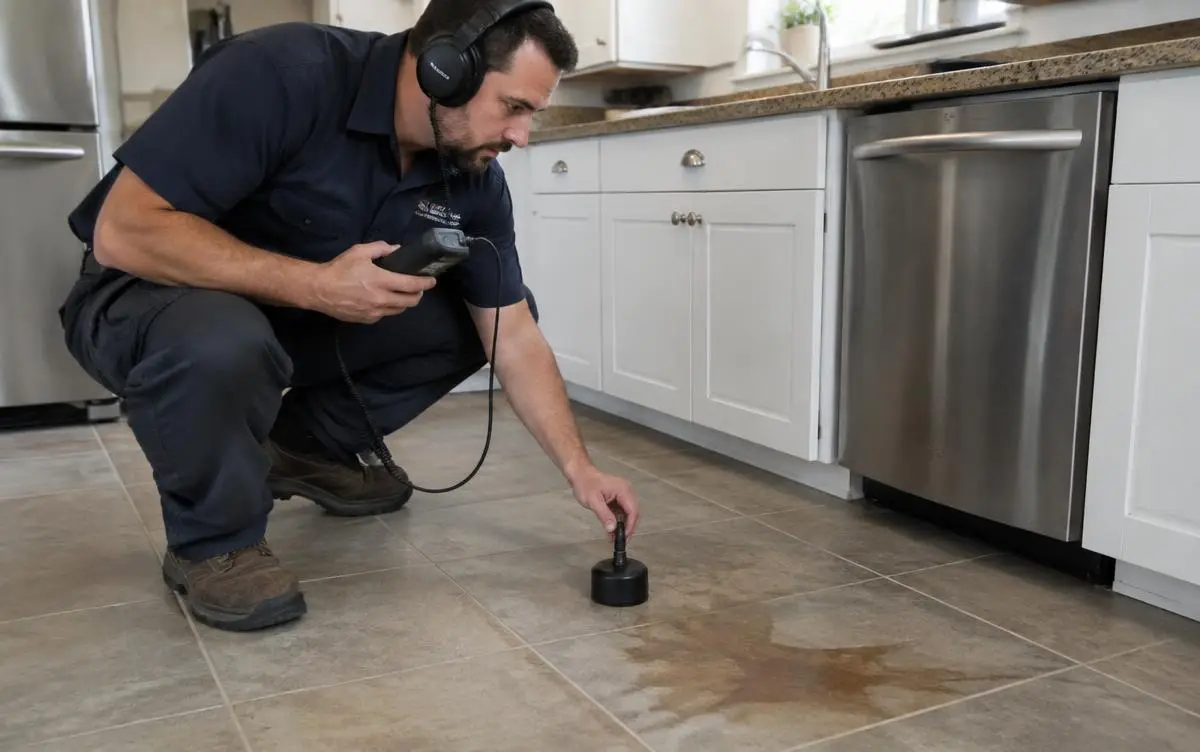
Before any repair, a plumber usually confirms the leak location with acoustic listening equipment, which picks up the sound of water escaping under the slab, or with pressure testing on isolated sections of pipe. This step typically costs $125 to $400 and narrows the dig or slab-cutting area to a few feet instead of guessing.
Infrared thermal imaging can also spot a warm patch on flooring above a hot water line leak, useful as a supporting check alongside acoustic equipment.
Mold risk from a slab leak
Water from a slab leak can wick up into drywall, baseboards, and carpet padding, creating mold risk within 24 to 48 hours in Tulsa's humid summer months. If carpet or drywall stayed wet for more than two days before the leak was found, ask the plumber or a remediation company to check for hidden moisture, not just visible mold.
Slab leak repair timeline by method
| Method | Typical time |
|---|---|
| Reroute | 4 to 8 hours |
| Spot repair | 1 day, plus concrete cure time |
| Tunneling | 1 to 2 days |
| Full repipe | 2 to 5 days |
Cost factors that move a slab leak quote
- Depth of the pipe below the slab, deeper lines cost more to access.
- Whether the leak sits under a load-bearing wall or open floor space.
- Flooring type above the leak; tile and stone take longer to cut and patch than carpet.
- Distance from an exterior wall, which affects whether tunneling is practical.
- Number of past leaks, since a repeat leak often shifts the recommendation toward a full repipe.
Slab leak repair and flooring repair
Breaking into a slab to fix a leak also means replacing the flooring above the repair area. Tile, hardwood and stone are harder to match exactly than carpet or vinyl, so homeowners with those floors sometimes choose rerouting or tunneling specifically to avoid cutting the slab and losing flooring that cannot be perfectly matched.
Repairing a slab leak under tile or hardwood
Spot repair or tunneling under tile, stone, or hardwood flooring adds cost and time because the finish material has to be carefully cut and later patched or replaced, and exact color or pattern matches are not always available years after original installation. Homeowners with these floors sometimes choose a reroute through the attic specifically to avoid cutting a floor that cannot be matched, even when reroute costs more in pipe and labor than a direct spot repair would.
Price ranges by repair method
Price depends on the pipe's depth, whether it sits under a load-bearing wall, and how many leaks the home has already had.
| Repair method | Typical cost |
|---|---|
| Reroute pipe through attic or walls | $500 – $2,000 |
| Spot repair (break slab, fix one section) | $1,000 – $3,000 |
| Tunnel under the slab to the pipe | $2,000 – $4,500 |
| Full repipe (whole house) | $4,000 – $15,000 |
| Epoxy pipe lining (whole system) | $3,000 – $8,000 |
Choosing between repair methods: a decision guide
- One isolated leak, pipe easy to access from above: reroute through the attic or walls, usually the cheapest option.
- Leak under a load-bearing interior wall: tunneling avoids cutting a structural section of slab.
- Leak under open floor space with easy access: spot repair, breaking a small slab section directly over the leak.
- Second or third leak in the same pipe run within a few years: full repipe, since more leaks are likely coming from pipe-wide corrosion.
Slab leak repair and homeowners insurance
Many homeowners insurance policies cover the cost to access and repair the slab itself (cutting concrete, patching) when a sudden plumbing leak causes the damage, but exclude the cost of the plumbing pipe repair itself. Ask your insurance agent to confirm what your specific policy covers before the plumber starts, and keep the leak detection report and repair invoice for the claim.
Repair method: reroute
The plumber abandons the leaking section of pipe under the slab and runs a new line through the attic, walls or crawlspace instead. This avoids breaking concrete and usually costs the least. It works best for single-leak homes with accessible attic or wall paths.
Repair method: spot repair (breaking the slab)
The plumber cuts a section of the concrete slab directly above the leak, exposes the pipe, replaces the damaged section, and patches the concrete. This fixes the exact spot but leaves the rest of the under-slab pipe in place, which may develop new leaks later if it is old copper.
Can a slab leak hurt the foundation or cause mold?
A small leak under the slab does not mean the foundation is failing. But water left running for months can wash out soil under the slab, and Tulsa's expansive clay swells when wet and shrinks when dry. That movement can crack tile, stick doors and widen slab cracks. Fast slab leak repair limits this.
Water that wicks into carpet pad, baseboards and drywall can grow mold within 24 to 48 hours. If flooring stays damp after slab leak repair, ask for moisture readings and drying before new flooring goes down. Insurance often covers the water damage and access, but not the pipe itself.
Noise and vibration clues before a visible leak
Some homeowners notice a faint hissing sound through the floor near a bathroom or kitchen wall weeks before any visible wet spot appears, especially at night when the house is quiet and other water use has stopped. This sound comes from water escaping at pressure through a small pinhole and is worth reporting to a plumber even without a water bill spike yet, since catching a slab leak early limits the area of possible mold or foundation damage.
Repair method: tunneling
Instead of breaking the slab, the plumber digs a tunnel from outside the foundation to reach the pipe from below. This avoids damaging interior flooring but takes longer and needs enough yard space to dig. It works well when the leak sits near an exterior wall.
Repair method: full repipe or epoxy lining
If a home has had repeated slab leaks, replacing the whole supply system above the slab (repiping) or lining the existing pipes with epoxy from the inside avoids repeated digging. Repiping costs more upfront but ends the pattern of new leaks every year or two. See repiping for details on that process.
Choosing the right method for your home
- One leak, easy attic or wall access: reroute, usually the cheapest.
- One leak, hard to reach from above, near an exterior wall: tunneling.
- One leak under an interior load-bearing area: spot repair through the slab.
- Second or third leak in a few years: repipe the whole system instead of repeating spot repairs.
Why slab leaks happen in Tulsa
Tulsa's clay soil swells when wet and shrinks in dry summer heat, which shifts the slab and stresses the copper pipe running through or under it. Many homes built from the 1960s through 1980s have copper supply lines in the slab, and pinhole leaks are common once that copper passes 40 to 50 years old. Hot water lines usually fail before cold lines because heat speeds up the corrosion.
Preventing future slab leaks
- Keep household water pressure under 80 PSI with a pressure-reducing valve; high pressure speeds up pinhole leak formation.
- Avoid planting large trees close to the foundation, since roots add to soil movement around the slab.
- Keep gutters clear so water drains away from the foundation instead of saturating soil under one side of the slab.
- Ask for a whole-home plumbing inspection every few years once copper supply lines pass the 30-year mark.
- Watch the water meter's leak indicator dial periodically; most meters have a small spinner that moves even with tiny, hard-to-hear leaks.
Hot water vs cold water slab leaks
A hot water line leak under the slab often shows up as a warm spot on the floor and raises the water heater's run time since it keeps refilling the tank. A cold water line leak is harder to notice by touch and is usually caught first through the water bill or meter spinning with everything off.
Why Tulsa's clay soil makes slab leaks more common
Expansive clay soil under much of the Tulsa metro swells when it absorbs water and shrinks as it dries out, shifting the ground under a home's slab through the seasons. That movement flexes copper supply lines embedded in or under the slab, and repeated flexing over 20 to 40 years creates the pinhole leaks that show up as a slab leak call.
Homes in areas with heavier clay content, including parts of South Tulsa and Broken Arrow, tend to see slab leaks appear earlier in a pipe's life than homes on more stable soil.
Copper pipe chemistry and pinhole leaks
Some slab leaks trace back to a condition called pitting corrosion, where mineral content or acidity in the water reacts unevenly with copper's inner wall, wearing through from the inside at one small point rather than evenly across the pipe. A plumber or water testing lab can check water pH and mineral content if a home has had more than one unrelated slab leak, since treating the water with a filter or pH adjustment can slow future pinhole formation.
After the repair
Until the repair, shut off the main water valve when no one is home to limit damage under the slab. Ask for a written warranty on the repaired line and whether a reroute is covered for longer than a spot repair.
- The plumber pressure-tests the new section before closing the wall, attic path or slab patch.
- Concrete patches need time to cure; ask how long before walking or placing flooring back over the area.
- Keep the receipt and repair details for your insurance claim if your policy covers slab leak damage.
- Ask whether a whole-house repipe makes sense if this is not your first slab leak.
Before you book: Tulsa price and problem guides
- Read the slab leak repair cost guide.
Questions Tulsa homeowners ask
How much does slab leak repair cost in Tulsa?
Rerouting a pipe typically costs $500 to $2,000. Breaking into the slab for a spot repair runs $1,000 to $3,000. Tunneling runs $2,000 to $4,500.
Do I have to break my floor to fix a slab leak?
Not always. Rerouting the pipe above the slab or tunneling underneath from outside can avoid breaking interior flooring.
How long does slab leak repair take?
Most repairs take 1 to 2 days, including the pipe work and patching. Tunneling can take longer depending on the dig.
Will my homeowners insurance cover slab leak repair?
Some policies cover the cost of finding and accessing the leak but not the underlying pipe repair. Check your policy details.
What if I have had more than one slab leak?
Repeated leaks in the same era of copper pipe often mean it is time for a whole-house repipe instead of another spot repair.
Does the repair fix the cause of the leak?
The repair fixes the damaged section. If the whole pipe run is old copper, other sections can still develop pinhole leaks later.