
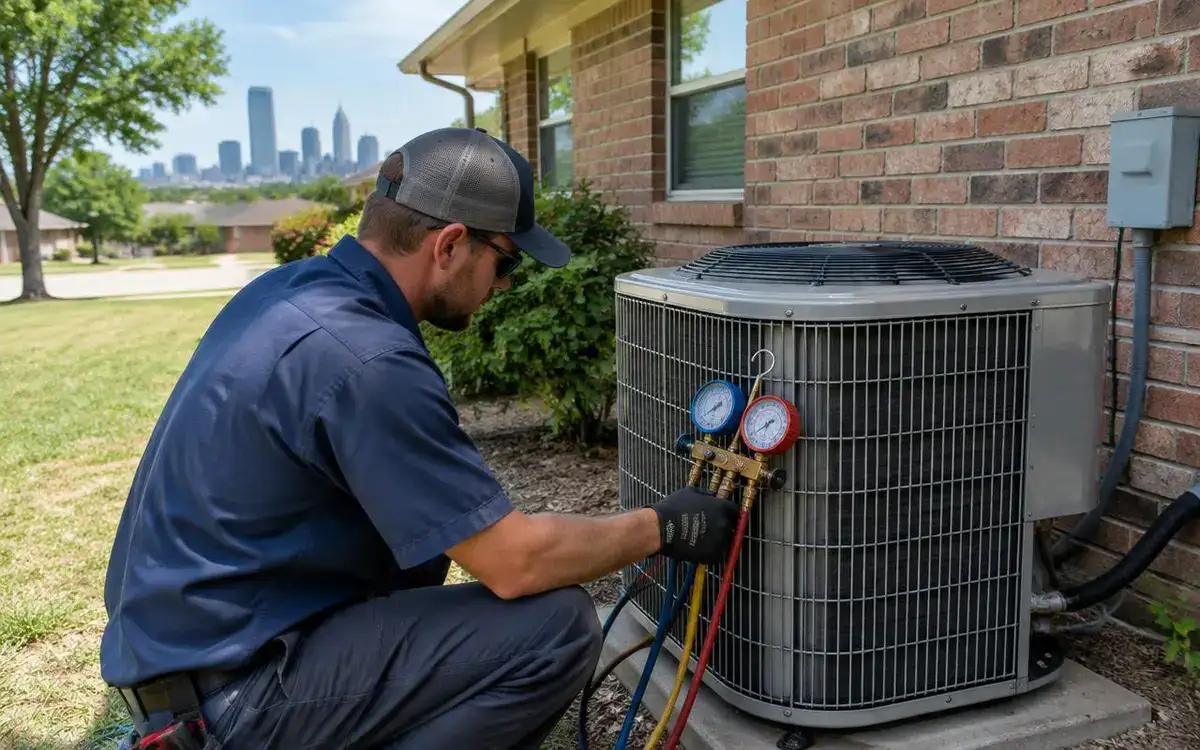
What an AC tune-up includes
- Checking refrigerant pressure and topping off if slightly low.
- Cleaning the condenser coil and fins outside.
- Testing the capacitor and contactor under load.
- Checking the blower motor, belt (if present), and airflow.
- Inspecting and clearing the condensate drain line.
- Checking the thermostat calibration and wiring.
- Replacing or recommending a new air filter.
How a technician inspects the electrical side
During a tune-up, a technician checks capacitor microfarad readings against the part's printed rating, since a capacitor that tests even 10 percent low often fails within the next hot stretch. The contactor gets a visual check for pitted or burned contacts, a common failure after thousands of start cycles over a Tulsa summer.
The tech also tightens electrical connections at the disconnect box and inspects wire insulation for cracking from heat exposure, since a loose connection can arc and trip a breaker during peak load on a 100°F afternoon.
Refrigerant checks during a tune-up
A tune-up measures refrigerant pressure against the manufacturer's target for the outdoor temperature at the time of the visit, using a set of gauges on the service ports. Refrigerant does not get used up like fuel; a low reading always points to a slow leak somewhere in the coil or line set.
Techs look for oil residue near fittings and the coil, since refrigerant oil leaking out leaves a visible trace that helps pinpoint a leak before it grows large enough to stop cooling completely.
- Correct refrigerant charge keeps the compressor running at its designed pressure.
- A system that is low on refrigerant can freeze the indoor coil within hours of running.
- Topping off refrigerant without finding the leak is a temporary fix, not a repair.
Want a real price for your home?
Get a quoteAttic and crawlspace duct checks
Many Tulsa homes, especially ranch-style houses in Midtown and South Tulsa built from the 1960s through 1980s, run supply ducts through an uninsulated attic that can hit 130°F or higher in July. A tune-up visit often includes a visual check of accessible duct joints for separated tape or crushed flex duct, since a leaking supply duct in the attic pushes cooled air into dead space instead of into rooms.
Sealing a single disconnected duct run can noticeably improve airflow to a bedroom or home office that always runs warmer than the rest of the house.
- Flex duct crushed under attic storage restricts airflow to that room.
- A torn duct boot at the register lets conditioned air escape into the attic.
- Mastic sealant or metal tape, not cloth duct tape, holds up over Tulsa summers.
Record-keeping that helps resale value
A folder of annual tune-up receipts, going back several years, can reassure a home buyer during a Tulsa real estate inspection that the AC system was not neglected. Appraisers and inspectors sometimes note the absence of any maintenance history as a flag worth a closer look at the unit's true condition.
Keeping digital copies, not just paper receipts, protects that history if the physical folder is lost during a move. Many Tulsa HVAC companies can email a digital service report automatically after each visit, which solves this for homeowners who do not want to manage paper files themselves.
AC maintenance cost in Tulsa
Many Tulsa HVAC companies bundle maintenance plans with discounted repair rates and priority scheduling during heat waves, which can be worth more than the tune-up itself in July and August.
| Service | Typical price |
|---|---|
| Single tune-up visit | $89 – $180 |
| Maintenance plan (2 visits/year) | $150 – $300 per year |
| Maintenance plan (heating + cooling, combined) | $200 – $400 per year |
| Coil cleaning (if heavily soiled) | $100 – $250 add-on |
How to spot an upsell during AC maintenance
A fair AC maintenance visit in Tulsa costs $89 to $180 and includes a written checklist with readings: capacitor µF, amp draw on the compressor and fan, refrigerant pressures and temperature split. Heat pumps need this twice a year, in spring and fall, because they run in both seasons.
- A refrigerant top-off with no leak search. Sealed systems do not use refrigerant; low charge means a leak, and topping off without finding it means paying again next summer.
- A capacitor reading inside its rated range (printed on the side, for example 45/5 µF ±6%) but replaced anyway. Ask to see the meter reading.
- Duct cleaning, UV lights or air purifiers sold as required. They are optional add-ons, not part of AC maintenance.
- Pressure to replace a working system on the first AC maintenance visit. Ask for the problem in writing and get a second quote.
What a dirty condenser coil costs you
A coated outdoor coil blocks airflow the same way a blanket over a radiator would, forcing the compressor to work harder to shed heat. Tulsa's cottonwood season in late spring and dusty, dry late-summer stretches both leave a film on the fins within weeks of a cleaning.
A coil running 20 percent dirtier than clean can raise a home's cooling electric use by 10 to 30 percent over a billing cycle, based on typical HVAC manufacturer efficiency data, and shortens compressor life by forcing it to run hotter than designed.
Smart thermostats and maintenance scheduling
A smart thermostat with usage history can flag an AC that is running longer cycles than the same month last year, which often means a system is losing efficiency before it fully fails. Several thermostat brands also send maintenance reminders based on runtime hours rather than just a calendar date.
Pairing a smart thermostat with a spring tune-up gives both a scheduled inspection and ongoing data between visits, which can catch a slow decline in performance before July.
Warranty requirements tied to maintenance
Many manufacturer parts warranties on compressors and coils, typically covering 5 to 10 years, require proof of annual professional maintenance to stay valid. Homeowners who skip the yearly visit and later file a warranty claim can be denied coverage, turning what should be a free part replacement into a full out-of-pocket repair.
Keep tune-up receipts and the technician's service report in a folder with the unit's installation paperwork so they are easy to produce if a warranty claim comes up.
Maintenance for homes with two systems
Larger Tulsa homes, especially two-story houses in South Tulsa and newer Broken Arrow and Owasso subdivisions, often run two separate AC systems, one for each floor or zone. Each system needs its own tune-up, since they have separate filters, coils, and refrigerant charges even though they share a single electric bill.
Scheduling both systems on the same visit usually costs less in combined trip time than booking two separate appointments, and most companies offer a modest discount for servicing a second unit at the same address.
Filter types and what they cost to maintain
Standard fiberglass 1-inch filters cost $2 to $5 each and need monthly replacement during peak summer use, while pleated filters cost $8 to $20 and last up to 3 months but restrict airflow more if the system was not designed for them. A technician can check during a tune-up whether your system's blower can handle a higher-MERV pleated filter without straining the motor.
Washable electrostatic filters cost more upfront, $30 to $80, but last years if rinsed monthly, which can offset their cost within a single Tulsa cooling season compared to replacing disposable filters every month.
Why Tulsa AC maintenance plans pay off
Tulsa summers push AC systems above 95°F for weeks at a time, often with humidity that keeps the compressor running longer per cycle. A unit that runs continuously for months needs clean coils and correct refrigerant charge to avoid a midsummer breakdown, when wait times for repair run longest.
A maintenance plan member often gets bumped ahead of non-plan customers during a heat wave, since techs are booked solid on the hottest days.
Best time to schedule AC maintenance
Spring, from March through early May, is the best window in Tulsa, before the first stretch of 90°F+ days. A fall visit is also worth it if your plan includes two visits, since it lets a tech check the system before storing it for winter. On most two-visit plans, that fall visit is the furnace or heat pump tune-up.
Signs maintenance is overdue
- You cannot remember the last time a filter was changed.
- The outdoor unit is visibly dirty or surrounded by grass clippings and leaves.
- Energy bills have crept up without a change in thermostat settings.
- The system is more than 3 years past its last professional check.
- Weak airflow from some vents compared to others.
DIY maintenance between professional visits
- Replace a standard 1-inch filter every 1 to 3 months; replace more often with pets or during high pollen weeks.
- Keep 2 feet of clearance around the outdoor unit; trim grass and shrubs back.
- Rinse the outdoor coil gently with a garden hose when visibly dusty (power off first).
- Make sure supply and return vents inside are not blocked by furniture or rugs.
- Watch for ice on the lines or coil, a sign to call for service before the next hot stretch.
How maintenance affects your AC's lifespan
A well-maintained AC in Tulsa typically lasts 12 to 15 years. Skipping maintenance and filter changes can cut that closer to 8 to 10 years, since a dirty system works harder and strains the compressor, the most expensive part to replace.
Maintenance plan vs one-time tune-up
A one-time tune-up makes sense if you just want a spring check before summer. A plan makes more sense if you want predictable annual cost, two visits instead of one, and priority scheduling. Ask the company whether the plan covers parts discounts in addition to visits.
Service area
Maintenance plans in this network are offered by HVAC companies serving Tulsa, Broken Arrow, Owasso, Bixby, Jenks and Sand Springs.
Next steps for Tulsa homeowners
- See AC repair.
- See emergency AC repair.
- See AC repair cost.
- See our AC not blowing cold air guide.
Questions Tulsa homeowners ask
How much does an AC tune-up cost in Tulsa?
A single tune-up typically costs $89 to $180. A yearly maintenance plan with two visits runs $150 to $300.
How often should I get AC maintenance?
Once a year at minimum, ideally in spring before the first hot stretch. Twice a year, spring and fall, is common with plans that also check heating.
Does maintenance prevent all AC breakdowns?
No, but it catches the most common failure points, like worn capacitors and dirty coils, before they cause a no-cool emergency.
Is a maintenance plan worth it in Tulsa?
Often yes, since plan members frequently get priority scheduling during July and August heat waves when non-plan wait times are longest.
What is included in a basic tune-up?
Refrigerant check, coil cleaning, electrical component testing, condensate drain check, and a filter check or replacement.
Can maintenance lower my electric bill?
Yes. A clean, correctly charged system uses less electricity to reach the same temperature than a dirty, neglected one.