
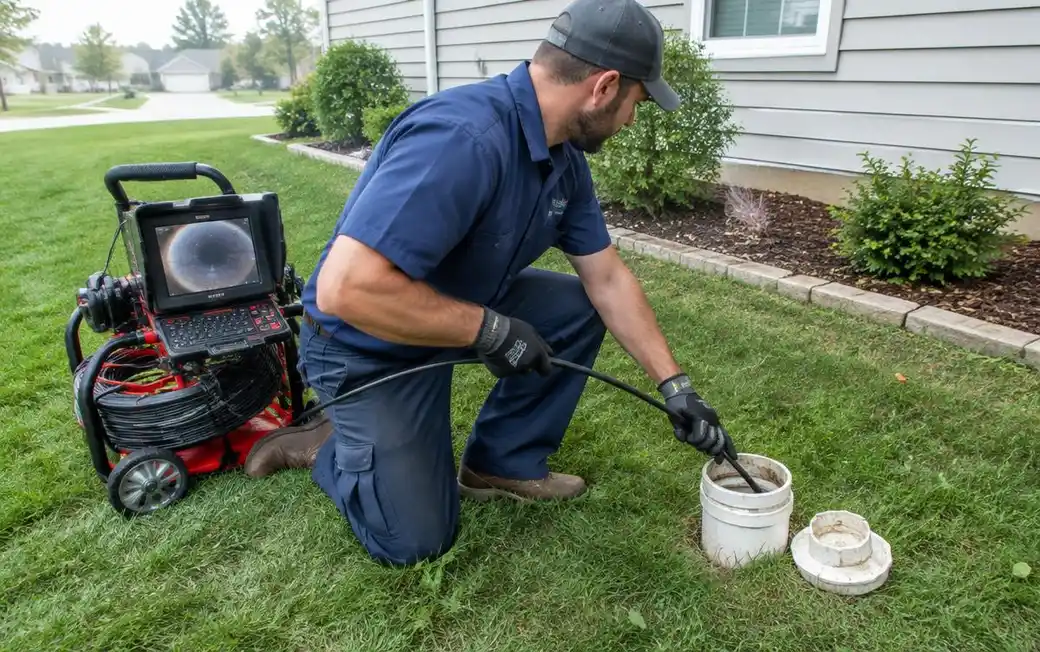
What hydro-jetting does
A jetting machine pushes water through a hose with a nozzle that sprays forward and backward jets. The backward jets pull the hose through the pipe while scouring grease, scale, sludge and root hair off the full inside wall, not just a channel through the center like a cable does.
Jetting and camera inspection combination pricing
Many plumbers bundle a camera inspection with a jetting job since the camera is needed anyway to confirm the pipe is clear afterward. Buying both together, often $550 to $1,200, typically costs less than scheduling two separate visits for inspection and cleaning.
Jetting frequency for different problem types
- Grease-heavy kitchen use: every 1 to 2 years.
- Known root intrusion with no recent repair: every 1 to 2 years until the pipe is repaired or lined.
- One-time heavy clog with no recurring history: as needed, no set schedule.
- Older cast iron main with scale buildup: every 2 to 3 years to keep flow steady.
Want a real price for your home?
Get a quoteJetting nozzle types
- Penetrating nozzle: drives straight through a blockage first so water can flow before full cleaning starts.
- Rotating or spinning nozzle: scours pipe walls evenly, used for grease and scale removal.
- Root-cutting nozzle: combines small blades with jets to chew through root intrusion at pipe joints.
- Flusher nozzle: lower pressure, used for sensitive older pipe that cannot take full force.
- Chain cutter attachment: for heavy mineral scale that a standard nozzle cannot break loose on its own.
Pipe materials and jetting pressure
| Pipe material | Jetting suitability |
|---|---|
| PVC | Good, handles standard pressure |
| Cast iron (sound) | Good, common in older Tulsa homes |
| Clay tile | Case by case, camera check required |
| Orangeburg (tar paper pipe) | Avoid; too fragile for jetting |
Commercial and multi-unit jetting
Restaurants and multi-family buildings in the Tulsa area often schedule jetting on a set calendar, commonly every 3 to 6 months for kitchen grease lines, rather than waiting for a backup. Grease trap lines clog faster than typical residential kitchen lines because of higher fryer and dishwasher volume.
Property managers for apartment complexes near downtown Tulsa sometimes jet shared sewer laterals annually to avoid a backup affecting multiple units at once.
Signs jetting worked
- Water drains noticeably faster at every fixture connected to the cleaned line.
- A follow-up camera pass shows bare pipe wall instead of a grease or scale coating.
- No gurgling sound from other drains when one fixture runs, a sign trapped air and blockage are gone.
- No return of the clog for several months, unlike a cable clearing that can fail again within weeks.
- Odors from floor drains or cleanouts disappear once trapped organic buildup is flushed out.
Jetting access points
Most residential jetting happens through an existing cleanout near the foundation or in the yard. Homes without a cleanout may need one installed first, typically $200 to $400, which also makes future drain service faster and cheaper.
Some older Tulsa homes only have a roof vent or a toilet as the closest access point, which can add time and cost to a jetting job compared with a yard cleanout.
Jetting trucks vs portable units
Larger truck-mounted jetting units generate more sustained pressure and water volume, used for main sewer lines and heavier grease buildup. Portable electric jetting units handle smaller branch lines inside tighter spaces like crawlspaces, where a truck hose cannot easily reach.
When jetting is the wrong tool
- A pipe with a visible collapse or severe sag (a belly) needs excavation or lining, not jetting, since water just pools in the low spot again.
- A cracked or severely corroded cast iron pipe can break further under jetting pressure; camera inspection first prevents this mistake.
- Orangeburg pipe, a tar-paper composite used in some homes built in the 1950s, is too fragile for standard jetting pressure and often needs replacement instead.
- A single small clog near a fixture trap is usually cheaper to clear with a hand auger than scheduling a full jetting truck.
DIY drain cleaners vs professional jetting
Chemical drain cleaners sold at hardware stores dissolve some organic clogs but do nothing for tree roots, pipe scale, or a structural sag, and repeated use can damage older pipe with prolonged chemical exposure. A $10 bottle that only masks a recurring slow drain often costs more over a year than one jetting visit that actually clears the line.
Hydro-jetting cost in Tulsa
Price depends on line length, how far the access point is from the blockage and how much buildup has to be cleared.
| Job | Typical range |
|---|---|
| Kitchen or branch line jetting | $250 – $500 |
| Main sewer line jetting | $400 – $900 |
| Jetting plus camera inspection | $550 – $1,200 |
| Heavy root or grease buildup, extra time | $100 – $300 added |
Jetting and drain line warranties
Some newer PVC drain lines carry a manufacturer warranty that can be affected by excessive water pressure. Ask the plumber to confirm the jetting pressure matches the pipe manufacturer's rated limit, usually printed in the installation documents if the home was built or repiped recently.
What a jetting quote should include
- Line length and number of access points to be jetted.
- Whether a camera inspection before and after is included in the price.
- Pressure level planned for the pipe material found on-site.
- Any additional charge if heavy buildup requires more time than estimated.
Jetting cost drivers beyond the base price
- Line length: a longer main line from house to street costs more jetting time than a short branch line.
- Access difficulty: no existing cleanout means added cost to cut one in before jetting can start.
- Severity found on camera: heavier buildup than expected can add time billed at an hourly rate beyond the flat quote.
- After-hours or emergency scheduling: a backed-up main line on a weekend typically costs more than a scheduled weekday appointment.
When hydro-jetting is the right call
- Recurring clogs in the same drain every few months, a sign of buildup rather than a single blockage.
- A kitchen line with heavy grease that a cable only punches a hole through.
- Root hair lining a sewer line after root cutting has been done before.
- Slow drainage across the whole house pointing to scale buildup in an old cast iron main.
- Before relining a sewer pipe, since the liner needs a clean pipe wall to bond to.
When jetting is not the right choice
Jetting needs a pipe that can hold up to pressure. A plumber runs a camera first on older or already-damaged pipe. Jetting a badly cracked, bellied or collapsed sewer line can make the damage worse, so in that case a repair or liner comes first, not jetting.
Jetting for storm and french drain lines
Exterior storm drains and french drains around a home's foundation can also clog with silt, roots, and debris over time, especially after Tulsa's heavy spring rains. Jetting clears these exterior lines the same way it clears sewer lines, restoring drainage away from the foundation before standing water becomes a problem.
Jetting as part of a home sale or inspection
Buyers and sellers in the Tulsa market sometimes request a sewer camera inspection before closing on an older home, especially one with mature trees near the sewer line's path. If that inspection shows buildup or minor root hair without structural damage, jetting is often recommended as a lower-cost fix than lining, done before or shortly after closing.
Hydro-jetting vs cable cleaning
| Cable (snake) | Hydro-jetting | |
|---|---|---|
| Clears a path through clog | Yes | Yes |
| Scours grease off full pipe wall | No | Yes |
| Removes root hair, not just roots | Limited | Yes |
| Typical cost (main line) | $200 – $450 | $400 – $900 |
| How long results last | Months | Often a year or more |
How a hydro-jetting job works
- The plumber runs a camera first to check the pipe's condition and confirm jetting is safe for it.
- A hose with a jetting nozzle feeds through a cleanout or access point.
- The water pressure is set based on pipe material and condition, usually 3,000 to 4,000 PSI for sewer lines.
- The nozzle is run the full length of the line, sometimes more than once for heavy buildup.
- A follow-up camera pass often shows the cleaned pipe wall.
How jetting pressure is chosen for the job
A technician does not run every pipe at the same pressure. Lighter buildup like soap scum or minor grease film is cleared around 1,500 to 2,000 PSI, while heavy root intrusion or hardened grease needs the full 3,000 to 4,000 PSI range most residential jetting trucks can produce. Pressure is adjusted at the machine based on what the camera inspection shows before jetting starts.
Flow rate, measured in gallons per minute, matters as much as PSI. A higher flow rate at moderate pressure moves debris out of a long pipe run better than high pressure alone in a short line, so the technician balances both settings to the specific pipe length and diameter.
Tulsa sewer lines and jetting
Many homes in Midtown, Maple Ridge and Brookside have clay tile sewer lines with joints every 2 to 3 feet, where tree roots get in. Jetting clears root hair from those joints better than cabling, but will not fix a cracked or offset joint. If the camera shows structural damage, repair that first and jet afterward to clean the rest of the line.
Jetting a kitchen line vs a main sewer line
| Line type | Typical issue | Jetting approach |
|---|---|---|
| Kitchen branch line | Grease buildup from cooking drains | Lower pressure, grease-cutting nozzle |
| Bathroom branch line | Soap scum, hair, mineral scale | Moderate pressure, rotating nozzle |
| Main sewer line | Root intrusion, scale, structural sag | Full pressure, root-cutting or penetrating nozzle |
Tree roots and Tulsa's older sewer lines
Clay tile sewer pipe, common under homes built before the 1970s in neighborhoods like Kendall-Whittier and parts of Brookside, has joints every 2 to 3 feet where tree roots find moisture and work their way in. Jetting with a root-cutting nozzle clears the immediate blockage, but roots regrow into the same joint within 1 to 2 years unless the line is lined or replaced at that joint.
Large shade trees planted close to a home's sewer line, common in older established Tulsa yards, are the single biggest predictor of repeat root-clog service calls on the same line.
Hydro-jetting near you
This service covers Tulsa, Broken Arrow, Owasso, Bixby, Jenks and Sand Springs. For a simple single clog, start with drain cleaning; ask about jetting if the clog keeps coming back.
Next steps for Tulsa homeowners
Questions Tulsa homeowners ask
How much does hydro-jetting cost in Tulsa?
A main sewer line jetting job typically costs $400 to $900. Smaller branch lines run $250 to $500.
Is hydro-jetting safe for old pipes?
A camera inspection first confirms the pipe can handle the pressure. Badly cracked or collapsed pipe needs repair before jetting.
How is jetting different from snaking a drain?
A cable clears a path through a clog. Jetting scours the entire inside wall of the pipe, removing grease and root hair, not just making a hole.
How often do I need hydro-jetting?
Homes with grease-heavy kitchen use or known root problems often jet every 1 to 2 years to prevent repeat clogs.
Can hydro-jetting damage my pipes?
On a sound pipe, no. On a severely deteriorated pipe, high pressure can worsen existing cracks, which is why a camera check comes first.
Does jetting fix a cracked sewer line?
No. Jetting cleans the inside of the pipe. A cracked or collapsed line needs a repair or liner.