
Sewer line warning signs: one slow drain vs. many
A single slow drain, like one bathroom sink, usually means a localized clog in that fixture's branch line. Multiple fixtures draining slowly at the same time, especially the lowest fixtures in the house like a basement floor drain or ground-floor toilet, point to a problem in the main sewer line that every drain in the house feeds into.
The main sewer line carries wastewater from the whole house to the city sewer connection or septic tank. When it is blocked or damaged, water backs up at the lowest points first before it reaches higher fixtures.
9 warning signs of a sewer line problem
- Multiple drains running slow at the same time, especially a bathtub and toilet backing up together when you run the washing machine.
- Gurgling sounds from a toilet or drain when a different fixture is used, such as the toilet bubbling when the washing machine drains.
- Sewage odor inside the house, in the yard, or near a cleanout, especially noticeable after rain.
- Water backing up into a bathtub or shower drain when you flush a toilet.
- A noticeably greener, lusher patch of grass in one area of the yard, which can mean sewage is leaking underground and acting as fertilizer.
- Soggy or sunken patches in the yard along the likely path of the sewer line, which can indicate a collapsed or leaking pipe below.
- Mold or mildew growth with no obvious water source, especially in a basement near floor drains.
- Needing to run a drain snake or plunger on the same drain repeatedly within a few weeks with no lasting fix.
- Cracks or shifting around a basement floor or foundation near where the sewer line exits the house, especially in homes on expansive clay soil.
Sewer gas smell: what it means
A smell plus slow drains in more than one fixture are two sewer line warning signs together, and they point to the main line. Book a camera inspection before any digging; it confirms which sewer line warning signs come from the pipe itself. Sewer gas also contains methane, so ventilate the room and avoid open flames near a strong smell.
- Smell from one floor drain: the trap has dried out. Pour a gallon of water into it.
- Smell from a toilet base: the wax ring has failed.
- Smell in the yard near the cleanout, one of the clearest sewer line warning signs: a crack or broken pipe in the sewer line.
- Smell throughout the house with gurgling drains: a blocked vent or a main line problem.
Want a real price for your home?
Get a quoteCommon causes of sewer line failure
| Cause | How it happens | Typical fix |
|---|---|---|
| Tree root intrusion | Roots grow into small cracks or joints seeking moisture, eventually blocking or cracking the pipe | Hydro jetting, pipe lining, or replacement |
| Pipe age and material failure | Clay or cast iron pipe common before the 1980s corrodes, cracks, or collapses with age | Trenchless or trench repair/replacement |
| Soil shifting | Expansive clay soil swells and shrinks, pulling pipe joints apart or cracking rigid pipe | Section repair or full replacement |
| Grease and buildup | Years of grease, wipes, and debris narrow the pipe until it backs up | Hydro jetting to clear the line |
| Bellied pipe (sagging section) | A section of pipe sinks due to soil settling, creating a low spot that traps waste | Spot repair or trenchless lining at the belly |
| Physical damage | Construction, heavy equipment, or a vehicle driving over a shallow line crushes or shifts the pipe | Section repair or replacement |
Step-by-step: what to do if you suspect a sewer line issue
- Step 1: Stop using water across the house, including laundry and dishwasher, to avoid worsening a backup.
- Step 2: Check the lowest drain in the house, such as a basement floor drain, since it backs up first in a main line blockage.
- Step 3: Flush one toilet and listen for gurgling at other fixtures, which confirms a shared line problem rather than an isolated clog.
- Step 4: Look outside for a cleanout, usually a capped pipe near the foundation or front yard. Do not remove the cap if sewage is backed up near the top, since pressure can cause it to spray out.
- Step 5: Check the yard for soggy patches, sunken ground, or an unusually green strip, and note the location relative to the house and street.
- Step 6: Call a plumber for a camera inspection rather than guessing at the cause; camera inspection pinpoints the exact issue and location before any digging.
Sewage backup is a health hazard
Raw sewage contains bacteria, viruses, and parasites that can cause serious illness. If sewage has backed up into a tub, floor drain, or basement, avoid direct contact, keep children and pets away, and wear gloves if any cleanup is necessary before a plumber arrives. Ventilate the area if safe to do so.
Do not use a sewage-backed-up bathroom or basement area until the line is cleared and the area is sanitized.
How plumbers diagnose sewer line problems
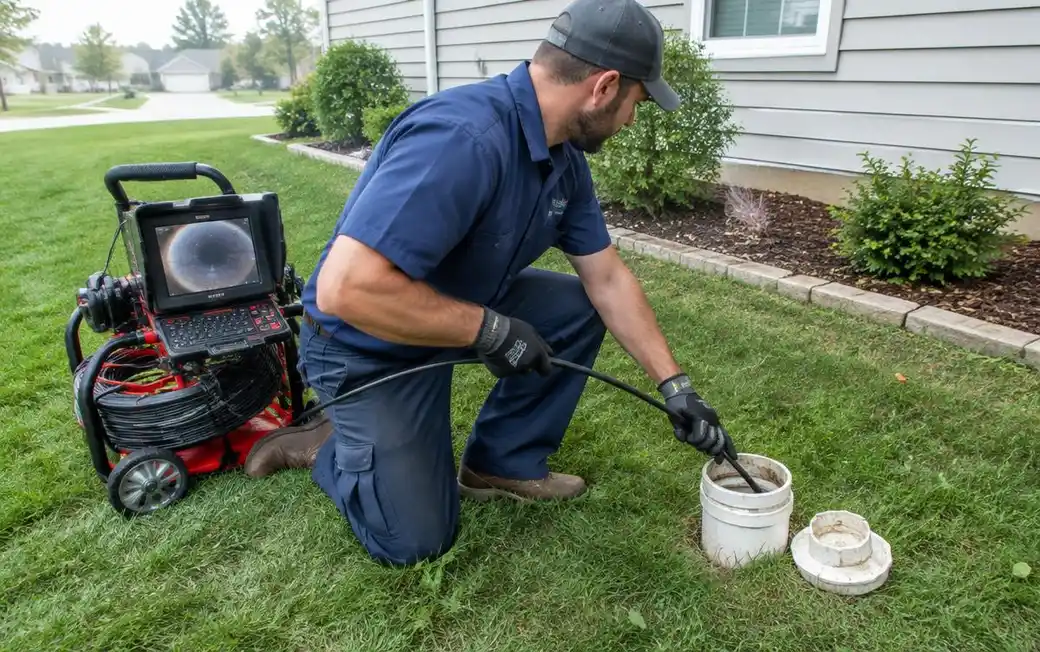
- Camera inspection, where a plumber feeds a waterproof camera through a cleanout to see the exact location and type of damage.
- Locating equipment that pinpoints the camera's position underground so repair digging targets the exact spot.
- Hydro jetting test, where high-pressure water clears buildup so the camera can get a clear view of the pipe's actual condition.
- Smoke testing in some cases, to find where sewer gas is escaping through a cracked line.
Repair methods and typical costs
| Method | What it involves | Typical cost |
|---|---|---|
| Hydro jetting (clearing, not repair) | High-pressure water clears roots and buildup without digging | $300 – $600 |
| Spot repair (trench) | Dig down to one damaged section and replace that section of pipe | $1,500 – $4,500 |
| Trenchless pipe lining | An epoxy liner is inserted and cured inside the old pipe, avoiding a full dig | $3,500 – $8,000 |
| Trenchless pipe bursting | A new pipe is pulled through while bursting the old one apart, needs 2 access points | $4,500 – $10,000 |
| Full trench replacement | The yard is excavated and the entire line is replaced with new pipe | $5,000 – $15,000+ depending on length and depth |
Trenchless vs. traditional repair
Trenchless methods avoid digging up the whole yard, driveway, or landscaping, which saves on restoration costs even though the trenchless method itself often costs more per foot than open trenching. Trenchless works best when the existing pipe path is in reasonably good shape structurally and does not have a severe belly or offset.
Traditional trench repair is sometimes unavoidable for badly collapsed sections, pipe running under a structure that trenchless equipment cannot get through, or when the damage covers a long enough stretch that full replacement is more practical than lining. Ask your plumber which method fits your camera inspection findings, and get the full cost including any landscaping or driveway restoration.
Will insurance cover sewer line repair?
Standard homeowners insurance often excludes sewer line repair caused by gradual wear, tree roots, or age, treating it as a maintenance issue. Some insurers offer optional sewer line endorsements or service line coverage riders that cover these repairs. Check your specific policy and consider adding this coverage if it is not already included.
Why trees are a major factor here
Mature trees are common in many established Tulsa neighborhoods, including Midtown, Brookside, and Maple Ridge, and tree roots are one of the most common causes of sewer line damage in homes with clay or cast iron pipe from before the 1980s. Roots seek out the moisture inside a sewer line and grow into any small crack or joint gap, eventually filling the pipe and cracking it further as they thicken.
Homes with large trees near the sewer line's path benefit from periodic camera inspections every few years, even without symptoms, to catch root intrusion before it causes a backup.
Preventing future sewer line problems
- Schedule a camera inspection every 2-3 years if you have mature trees near the sewer line path or a home built before 1980.
- Never pour grease down a drain; let it cool and throw it in the trash, since grease is a leading cause of main line buildup.
- Only flush toilet paper; wipes, even ones labeled flushable, do not break down the same way and contribute to blockages.
- Consider root treatment products recommended by a plumber if a camera inspection shows early root intrusion, to slow regrowth between cleanings.
- Keep large new trees planted well away from the known sewer line path when landscaping.
Local soil considerations
Expansive clay soil across much of the metro swells with spring rain and contracts during summer drought, a cycle that stresses rigid, older sewer pipe joints more than it does flexible modern PVC. Homes on this clay soil with cast iron or clay sewer lines older than 40 years are more likely to develop offset joints and cracks from this repeated ground movement than newer PVC systems common in Owasso, Bixby, and other areas built out in the 2000s.
Sewer pipe material by home age in Tulsa
Older homes show sewer line warning signs sooner, often after a heavy rain or a dry summer. A camera inspection names the pipe material and the problem, so the repair quote is based on facts.
| Home built | Likely sewer pipe | Common problem |
|---|---|---|
| Before 1950 | Clay tile | Root entry at joints, cracks |
| 1950 to 1975 | Cast iron or Orangeburg (fiber pipe) | Rust scale, collapse, flattening |
| 1975 to 1990 | Cast iron or early PVC/ABS | Joint separation, bellies from soil movement |
| After 1990 | PVC | Bellies or offset joints from clay soil shifting |
Choosing a plumber for sewer line work
Ask whether a camera inspection is included in the diagnostic visit and whether you get a copy of the video or at least clear photos of the problem area. Get a written scope that names the method, hydro jetting, lining, bursting, or trench replacement, along with a price for landscaping or driveway restoration if trenching is needed, so the final bill does not surprise you after the yard is dug up.
Oklahoma clay soil swells when wet and shrinks in drought, which shifts older clay and cast iron sewer pipe at the joints. If a plumber repairs a section, ask what the warranty covers: the new pipe only, or the whole line to the city tap.
Next steps for Tulsa homeowners
Questions Tulsa homeowners ask
How do I know if it's a clog or a sewer line problem?
A single slow drain is usually a clog. Multiple drains backing up together, or gurgling at one fixture when another runs, points to the main sewer line.
Is a sewage backup an emergency?
Yes. Raw sewage is a health hazard, and backups typically worsen with continued water use, so stop using water and call a plumber the same day.
How much does sewer line repair cost?
Hydro jetting to clear a line runs $400 to $900. Actual pipe repair ranges from $1,500 for a spot repair to $15,000+ for a full trench replacement.
What causes most sewer line problems in older homes?
Tree root intrusion into aging clay or cast iron pipe is the most common cause, often combined with soil movement pulling joints apart over decades.
Can I clear a sewer line blockage myself?
A plunger or store-bought drain cleaner will not fix root intrusion or a collapsed section. A camera inspection and professional hydro jetting or repair is needed for main line issues.
Does trenchless repair really avoid digging up my yard?
Mostly yes. Trenchless lining or bursting needs only one or two small access points instead of trenching the whole pipe path, though it costs more per foot than open trenching.
How often should I get a sewer camera inspection?
Every 2-3 years if your home has mature trees near the line or pipe older than 40 years; otherwise, inspect if you notice any warning signs.