
Slab leak signs: what a slab leak actually is
A slab leak is a leak in a water or sewer line buried under or inside a home's concrete foundation slab. Most homes built on a slab route hot and cold supply lines through or under that concrete, and those pipes are invisible until something fails.
Copper pipe under a slab typically lasts 20 to 40 years before pinhole leaks start from corrosion. Homes built in the 1970s through 1990s with thin-wall copper are the most common slab leak calls in this area. Expansive clay soil under much of Tulsa swells and shrinks with rainfall, which shifts the slab slightly and stresses pipes running through it.
9 warning signs of a slab leak
- A warm or hot spot on the floor, even over carpet or tile, that is not near a heating vent. This points to a hot water line leaking under the slab.
- A water bill that jumps 2 to 4 times the normal amount in a single billing cycle with no new fixtures, guests, or irrigation added.
- The sound of running water inside walls or under the floor when every faucet and appliance in the house is off.
- Low water pressure at one or more fixtures while others stay normal, since water is escaping before it reaches the fixture.
- A damp spot on carpet, or carpet that stays wet or smells musty with no spill or window leak to explain it.
- Cracks in tile, baseboards, or drywall near the floor line that appear suddenly, caused by the slab shifting as soil under the leak saturates.
- The water meter's leak indicator dial spins even when every fixture, ice maker, and irrigation valve in the house is shut off.
- Mold or mildew smell in a room with no visible water source, especially in a room over a slab leak that has been running for weeks.
- Standing water or a soggy patch in the yard near the foundation, which can mean a leaking line running from the slab toward an outside hose bib or meter.
Slab leak signs you can feel or hear
Two or more of these slab leak signs together, plus a moving water meter, is strong evidence. Call a plumber with electronic leak detection before opening any floor.
- A warm spot on a tile or wood floor: a hot water line leaking under the slab heats the concrete above it. Walk barefoot over the area; this is one of the clearest slab leak signs.
- The sound of running water with every faucet off, often loudest near a bathroom or kitchen wall at night.
- The water heater running more than usual, because hot water is leaking away and being replaced.
- Damp carpet pad or a musty smell along one wall with no roof or window leak above it.
Want a real price for your home?
Get a quoteHow to confirm a suspected slab leak at home
- Step 1: Turn off every faucet, appliance, ice maker, and irrigation valve in the house.
- Step 2: Find the water meter, usually near the curb or street, and note the small leak indicator dial or the numbers on the odometer-style readout.
- Step 3: Wait 1 to 2 hours without using any water, then check the meter again. Any movement means water is flowing somewhere in the system.
- Step 4: Shut off the main house valve, usually near where the line enters the home, and check the meter again. If it still moves, the leak is on the utility side; if it stops, the leak is inside your plumbing.
- Step 5: Walk barefoot across tile and hard flooring looking for a warm spot, which usually means a hot water line leak under that area.
- Step 6: Note which rooms have new cracks, damp carpet, or a mildew smell, and write down the approximate locations to tell a plumber.
How common slab leaks are in Tulsa-area homes
Slab leak signs show up more often in homes built on slabs in the 1960s through 1980s with copper lines run under the concrete. Tulsa's expansive clay soil swells after rain and shrinks in drought, which moves the slab and rubs pipe against concrete and gravel. Homes with PEX run overhead through the attic rarely have slab leaks.
If you have seen slab leak signs once and had a spot repair, the same copper is the same age. A reroute of that line is often cheaper than a second spot repair.
Slab leak causes
| Cause | Why it happens | Common in |
|---|---|---|
| Pipe corrosion | Thin-wall copper pipe pits and develops pinhole leaks after 20+ years, especially with acidic water | Homes built 1970s-1990s |
| Soil movement | Expansive clay soil swells with rain and shrinks in drought, shifting the slab and stressing pipes | Homes on clay soil across the metro |
| Poor original installation | Pipe rubbing against gravel, rebar, or another pipe wears a hole over years of expansion and contraction | Any age, more common pre-1990 |
| Abrasion from water hammer | Repeated pressure surges vibrate a pipe against its surrounding material until it wears through | Homes with no water hammer arrestors |
| High water pressure | Pressure above 80 psi stresses joints and thin spots in pipe over time | Homes without a pressure-reducing valve |
Why you should not wait
A slab leak rarely stops on its own and usually gets worse as water keeps eroding soil under the foundation. Left running for months, a leak can wash out soil under the slab, leading to settling, cracked tile, and uneven floors that cost far more to fix than the original leak.
A hot water slab leak also wastes energy constantly reheating water that drains straight into the ground, on top of the higher water bill. Mold growth under carpet or flooring from a slow leak can also trigger health complaints and added remediation cost.
How plumbers find a slab leak
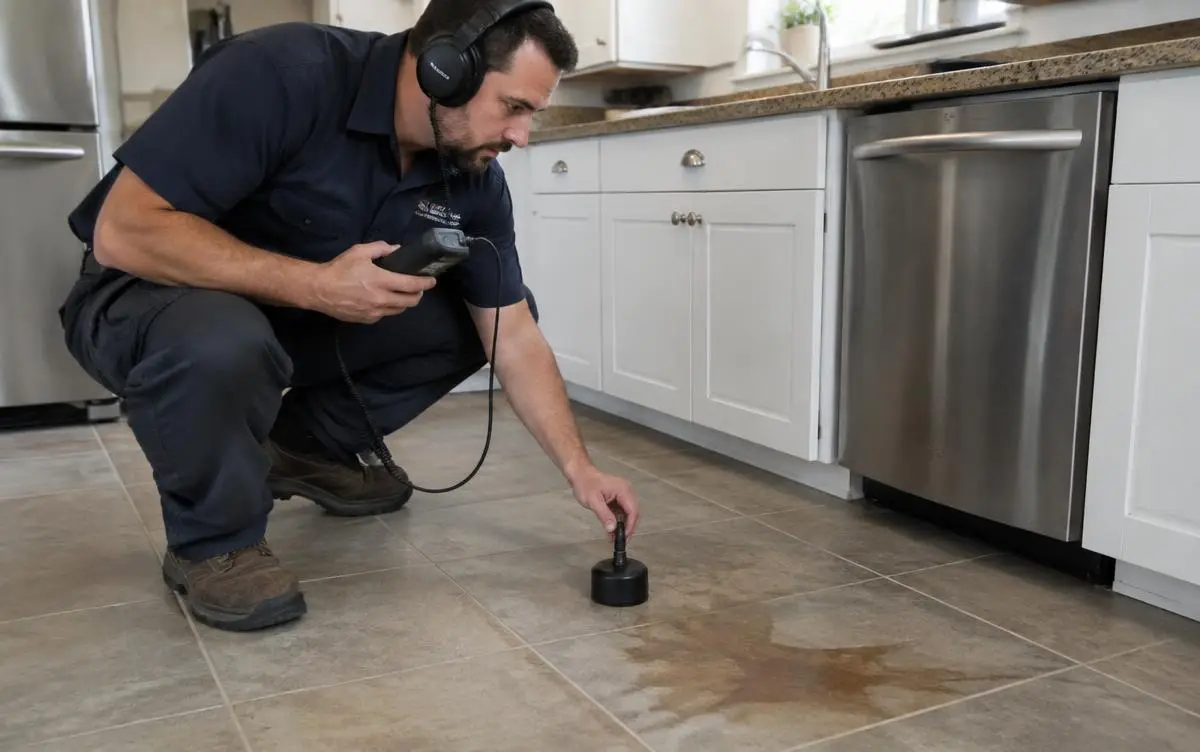
- Electronic leak detection with acoustic listening equipment that picks up the sound of water escaping under concrete.
- Line pressurization, where a plumber pressurizes the plumbing with air or tracer gas and listens for the escape point.
- Infrared camera scanning to spot temperature differences in the slab caused by a hot water leak.
- Video camera inspection pushed through cleanouts for sewer-related slab leaks.
- A combination of these methods narrows the leak to a small area, often within a foot or two, before any concrete is opened.
Repair options and typical cost
| Method | What it involves | Typical cost |
|---|---|---|
| Spot repair | Break a small section of slab, cut out and replace the damaged pipe section | $1,500 – $4,000 |
| Reroute (above-slab) | Abandon the under-slab line and run new pipe through walls or the attic instead | $2,000 – $5,500 |
| Full repipe | Replace all old supply lines in the home with new copper or PEX, usually above-slab | $4,000 – $15,000 |
| Pipe lining (epoxy) | Coat the inside of the existing pipe without breaking the slab, used on some sewer slab leaks | $3,000 – $7,000 |
Spot repair vs. reroute vs. full repipe
A spot repair fixes one leak fast and is the cheapest option, but if the home's pipe is old copper, more leaks often appear nearby within a few years. A reroute avoids breaking concrete at all by running a new line overhead, which costs a bit more upfront but skips future slab work entirely.
A full repipe makes sense for homes over 30 years old with more than one leak history, since it replaces all the aging pipe at once rather than paying for repeated spot repairs. Ask a plumber for the age and condition of the rest of the home's pipe before deciding.
Will homeowners insurance cover a slab leak?
Many homeowners policies cover the cost to access and repair the leak itself, plus the water damage it caused, but exclude the cost of the pipe replacement if the cause was gradual wear or corrosion. Coverage details vary widely by insurer and policy. Check your specific policy and ask your insurer directly before assuming coverage.
What to do while you wait for a plumber
- Shut off the main water valve if the leak is large or the water bill spike is severe, and use bottled water until the plumber arrives.
- Move furniture and rugs off any damp flooring to limit mold growth and water damage spread.
- Run a fan or dehumidifier on a damp carpet area if you can safely leave the water off.
- Take photos of cracks, damp spots, and the water meter reading for your records and for any insurance claim.
- Do not attempt to cut into the slab yourself; locating the exact pipe before cutting prevents unnecessary concrete damage.
Preventing future slab leaks
- Install a pressure-reducing valve if your home's water pressure runs above 80 psi; high pressure accelerates pipe wear.
- Add water hammer arrestors near washing machines and dishwashers to stop pipe-damaging pressure surges.
- Consider a whole-home repipe proactively if your home has original copper from before 1990 and has already had one slab leak.
- Watch your water bill each month for unexplained increases, which is often the earliest warning sign available.
- Keep large trees and their roots away from the foundation, since root growth can also disturb soil and shift slab-level pipe.
Local soil and climate factors
Expansive clay soil is common across the Tulsa metro, and it swells noticeably after heavy spring rain, then shrinks hard during summer drought. That repeated movement is one of the bigger contributors to slab leaks in this region, more so than in areas with stable, sandy soil. Neighborhoods with older housing stock, including parts of Midtown, Brookside, and Kendall-Whittier, see more slab leak calls simply due to the age of original plumbing, while newer construction in South Tulsa, Bixby, and Owasso's Bailey Ranch area more often has PEX plumbing that is less prone to pinhole corrosion.
Choosing a plumber for slab leak work
Ask whether the plumber owns electronic leak detection equipment or subcontracts that step, since in-house detection usually means faster scheduling and a single point of contact. Ask for the camera or acoustic findings in writing before any concrete is opened, and get a clear scope: spot repair, reroute, or full repipe, with a price for each option so you can compare before committing to the largest job.
Oklahoma red clay moves with the seasons, and that movement stresses copper lines under the slab. A repair should come with a written warranty on the fixed section; homeowners insurance may cover access and repair costs but often not the pipe itself, so call your insurer before work starts.
Next steps for Tulsa homeowners
- See slab leak repair.
- See our slab leak repair cost guide.
- See frozen pipe.
Questions Tulsa homeowners ask
What does a slab leak sound like?
A hissing or trickling sound coming from the floor or a wall near the floor line, audible when the house is quiet and no fixtures are running.
Can a slab leak fix itself?
No. A slab leak is a failure in a pressurized pipe and will keep leaking, and usually worsening, until it is repaired.
How much does it cost to fix a slab leak?
A single spot repair typically runs $1,500 to $4,000. A reroute or full repipe runs $2,000 to $15,000 depending on scope.
How long can a slab leak go unnoticed?
Small leaks can run for weeks or months before symptoms like a warm floor spot or high bill become obvious, especially leaks under tile or carpet.
Is a slab leak an emergency?
Treat a confirmed slab leak as urgent. It will not fix itself, and waiting adds water damage and soil erosion risk under the foundation.
Do I need to break my whole floor to fix a slab leak?
Usually not. Most repairs need only a small section of slab opened once the leak is pinpointed with acoustic or infrared equipment.
Will my water bill go back to normal after repair?
Yes, once the leak is repaired, your bill should return to its normal baseline within the next billing cycle.
Can high water pressure cause a slab leak?
Yes. Pressure above 80 psi stresses pipe joints and thin spots over time, and a pressure-reducing valve helps prevent future leaks.