
Toilet won't flush? Quick checks before calling anyone
- Take the tank lid off and look inside. Check that the chain connecting the flush handle to the flapper is not disconnected, too loose, or too tight.
- Check the water level in the tank; it should sit about 1 inch below the top of the overflow tube. A low level means a weak flush.
- Look at the flapper, the rubber seal at the tank's bottom. If it looks warped, cracked, or does not seal fully, water leaks out before a full flush builds pressure.
- If the handle feels loose or does nothing when pressed, the problem is the handle, chain, or lift arm, not the drain.
- If water rises close to the rim after flushing instead of draining, stop flushing again; this points to a clog, and a second flush risks an overflow.
- Check if other fixtures in the house are draining slowly too; multiple slow drains can point to a main sewer line issue rather than just the toilet.
Gurgling or more than one fixture backing up
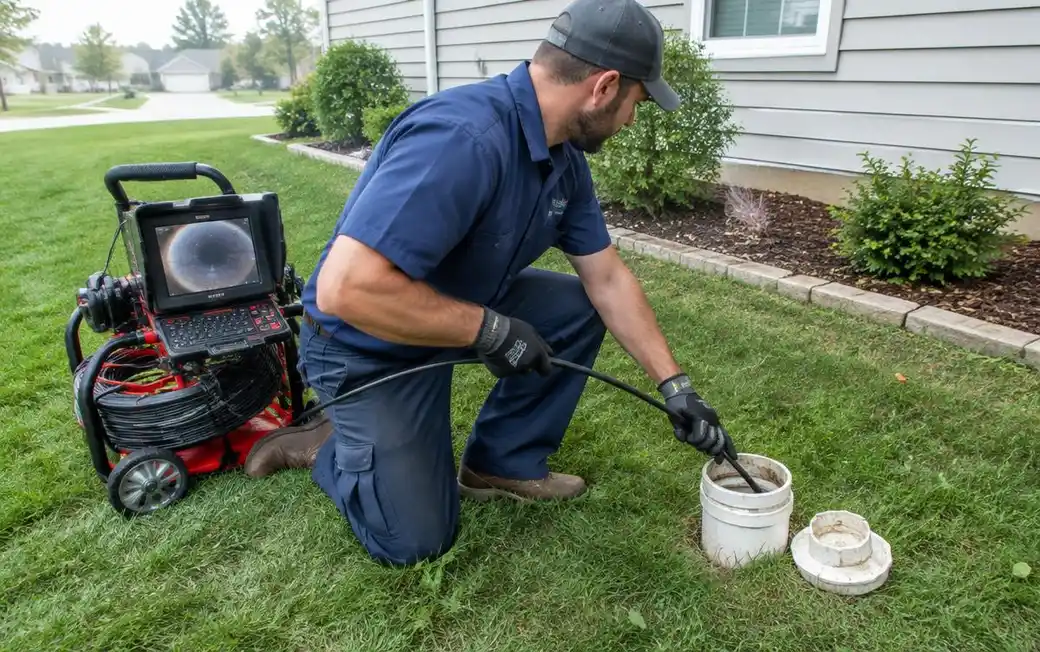
A toilet won't flush and a tub or floor drain gurgles at the same time: that points to the main sewer line or a blocked vent, not the toilet. Plunging will not fix it when the toilet won't flush for this reason. A plumber with a drain machine or a camera is the next step.
Causes and fixes
| Cause | Fix | Typical cost |
|---|---|---|
| Clog in toilet trap | Plunge or use a toilet auger | $0 – $150 |
| Disconnected or loose flapper chain | Reattach or adjust chain length | $0 – $20 |
| Worn or warped flapper | Replace flapper | $10 – $30 |
| Low tank water level | Adjust fill valve float | $0 |
| Clogged main sewer line | Snake or hydro jet the line | $150 – $600 |
| Broken lift arm or handle | Replace handle assembly | $15 – $40 |
| Mineral buildup blocking rim jets | Clean rim jets with a wire or vinegar soak | $0 – $20 |
| Low water pressure to tank | Check and open supply valve fully | $0 – $150 |
| Cracked tank or bowl | Replace toilet | $200 – $500 installed |
Want a real price for your home?
Get a quoteStep-by-step diagnosis
- Step 1: Remove the tank lid carefully and set it somewhere padded; it can chip or crack easily.
- Step 2: Press the handle while watching inside. If the flapper does not lift, check and reattach the chain.
- Step 3: If the flapper lifts and drops normally but the flush is weak, check the water level against the overflow tube mark and adjust the float if it sits too low.
- Step 4: If water builds in the bowl and drains slowly or not at all, stop flushing again. Use a flange plunger, sealing it fully over the hole, and plunge with firm, steady strokes 10 to 15 times.
- Step 5: If plunging does not clear it, use a toilet auger, feeding the cable gently into the trap and cranking the handle to break up or hook the clog.
- Step 6: If other drains in the house are also slow, or an auger does not clear the blockage, this points to the main line, and you should stop and call a plumber.
- Step 7: Check the flapper for wear after confirming the clog is clear; a worn flapper is a separate, common cause of a weak or running flush.
Safety warning
Do not flush a toilet a second or third time once water has risen close to the rim; this is how overflows and floor water damage happen. Shut off the water at the valve behind the toilet first, then address the clog.
Never use a chemical drain cleaner in a toilet bowl before plunging or snaking; the chemicals can splash back and cause chemical burns to skin and eyes, and they can damage older pipe materials.
When to call a pro
Call a plumber if plunging and an auger do not clear the clog, if multiple drains in the house back up at the same time, or if water backs up into the bathtub or shower when you flush, which points to a main sewer line blockage. Call the same day if you have only one bathroom and it is unusable.
A plumber can snake a deeper clog with a motorized auger or use a camera inspection on a sewer line if clogs keep coming back, which is common in homes with older clay pipe on expansive clay soil.
What a plumber does on a toilet call
- Uses a motorized closet auger to clear trap clogs that a hand auger could not reach.
- Pulls the toilet off the flange if an object is lodged, which a snake cannot clear.
- Runs a camera down the line if clogs recur, to check for root intrusion or a bellied pipe section.
- Replaces the fill valve, flapper, or full flush assembly if parts are worn beyond adjustment.
- Checks the wax ring and flange for a failed seal if the toilet rocks or leaks at the base.
- Hydro jets the line if grease or heavy buildup is found rather than a single clog.
What a flush problem usually costs to fix
| Job | Typical price |
|---|---|
| Service call and diagnosis | $75 – $125 |
| Flapper or fill valve replacement | $10 – $40 parts, $100 – $200 installed |
| Auger clog clearing | $100 – $250 |
| Main line snaking | $150 – $400 |
| Hydro jetting | $300 – $600 |
| Full toilet replacement, installed | $200 – $500 |
Prevention
- Flush only waste and toilet paper; wipes labeled flushable still cause clogs and should go in the trash.
- Keep a flange plunger in each bathroom so a minor clog can be handled immediately before it backs up further.
- Check the flapper and chain once a year; rubber flappers typically last 3 to 5 years before they warp.
- Have a plumber camera-inspect the sewer line if clogs recur more than twice a year, especially in homes over 20 years old.
- Avoid dropping cotton swabs, dental floss, or small toys near the toilet where kids can drop them in.
Clay soil and older pipe in this area
Expansive clay soil across the Tulsa area shifts with wet and dry cycles, which can crack or offset older clay or cast iron sewer lines over the decades and cause recurring backups that look like a simple toilet clog at first. Homes in Kendall-Whittier, Florence Park, and other older Tulsa neighborhoods are more likely to still have original clay sewer lines, where root intrusion is a common cause of repeat clogs.
Questions to ask before hiring a plumber for a clog
Ask whether the quote covers a simple auger clearing or includes a camera inspection if the clog returns, since a recurring clog in an older home can point to a bigger line issue. Confirm the diagnostic fee, ask if it applies toward repair cost, and ask whether the plumber is licensed through the Oklahoma Construction Industries Board before scheduling.
Older vs newer toilet designs
Toilets made before the mid-1990s often use 3.5 to 5 gallons per flush and rarely clog from flow alone, but their flapper and fill valve parts are now old and commonly worn. Newer low-flow toilets using 1.28 to 1.6 gallons per flush rely more on bowl design and a clear trap to flush well, so a partial clog shows up faster as weak flushing on these models.
Toilet fills with water but won't flush
When the toilet won't flush and the bowl only fills and drains slowly, the problem is one of two things: a partial clog in the trap or drain, or blocked rim jets and siphon jet. Mineral buildup from hard water closes the small holes under the rim and the jet at the bottom of the bowl, so water enters too slowly to start a siphon.
To test: pour a gallon bucket of water quickly into the bowl. If it flushes well, the drain is clear and the jets are the problem. Clean them with a wire or a small mirror and a stiff brush, or soak with vinegar. If the bucket test fails too, the toilet won't flush because of a clog.
What not to pour or flush
- Grease and cooking oil, which solidify in pipes and trap other debris behind them.
- Paper towels, baby wipes, and wipes labeled flushable, which do not break down like toilet paper.
- Cat litter, even types labeled flushable, which can clump and block the trap.
- Dental floss, which tangles around other debris and forms a persistent clog.
- Large amounts of toilet paper at once; flush partway through if using a lot.
Newer homes and well water considerations
Newer construction in Bixby, Jenks, and Owasso typically has PVC drain lines that clog less from root intrusion, but can still see mineral buildup in rim jets and fill valves from the area's moderate hard water, which slows flush strength over a few years even in newer plumbing.
Most flapper and fill valve kits cost under $30; if a plumber installs them, ask whether parts and labor carry a warranty of at least 30 days.
Next steps for Tulsa homeowners
- Ready to fix it? toilet repair in Tulsa — a licensed local pro calls back with a price.
- See garbage disposal repair.
- See gas line repair.
- See emergency plumber service.
Questions Tulsa homeowners ask
Why does my toilet fill up but not flush down?
This points to a clog in the trap or further down the drain line. Try a flange plunger first, then a toilet auger if plunging does not clear it.
Why is my flush weak even though nothing is clogged?
Check the tank water level against the overflow tube mark, and check the flapper for wear. Both are common, inexpensive causes of a weak flush.
Is it safe to keep flushing if the bowl is filling up?
No. Stop immediately once water rises near the rim. Shut off the supply valve behind the toilet and clear the clog before flushing again.
How much does it cost to fix a toilet that won't flush?
Simple parts like a flapper or chain cost under $40. A clog cleared by a plumber runs $100 to $250. Main line work runs $150 to $600.
Can tree roots cause a toilet to stop flushing?
Yes, especially in older homes with clay sewer lines. Roots growing into small pipe cracks are a common cause of recurring clogs.
Should I use a chemical drain cleaner on a clogged toilet?
No. Chemical cleaners can splash back and cause burns, and they can damage older pipe. Use a plunger or auger instead.
Why do multiple toilets or drains back up at the same time?
This points to a clog in the main sewer line rather than a single fixture, and needs a plumber with a motorized auger or camera.
How long does a toilet repair take?
Simple fixes like a flapper or chain take under 15 minutes. Clearing a stubborn clog typically takes a plumber 30 to 60 minutes.